

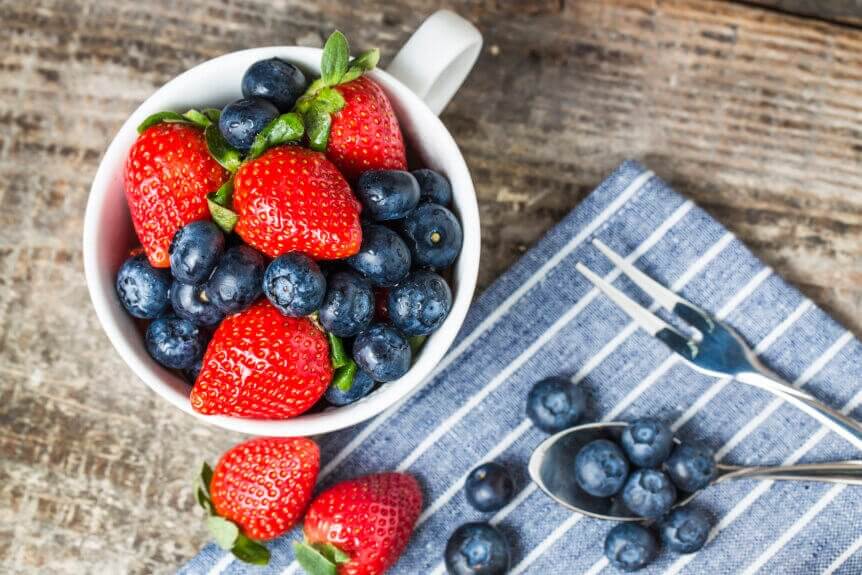
Spring fruits and vegetables make it easy to refresh your plate with color, flavor, and nutrients after winter. Spring fruits and vegetables supply fiber, vitamins, and antioxidants that support energy, digestion, and immune health for older adults.
Think in colors. Red foods like strawberries and tomatoes provide vitamin C and lycopene for heart support. Orange choices such as carrots, apricots, and sweet peppers deliver beta carotene for eye and skin health. Yellow produce, including pineapple, corn, and yellow squash, offers vitamin C and helpful phytonutrients. Greens like spinach, asparagus, and broccoli add folate, calcium, and fiber for bones and regularity. Blue and purple foods—blueberries, plums, and purple cabbage—contain anthocyanins linked with memory support.
Buy seasonal when possible for peak flavor. Farmers markets and produce stands often carry local crops that travel fewer miles and stay fresher. If transportation is a hurdle, choose frozen fruits and vegetables without added sugar or salt; they are picked at ripeness and keep nutrients well.
Make it simple to eat more plants. Add berries to oatmeal, tuck spinach into scrambled eggs, and top baked potatoes with steamed broccoli and beans. Build a rainbow salad with mixed greens, tomatoes, cucumbers, shredded carrots, and a sprinkle of nuts. For a warm option, roast a sheet pan of asparagus, carrots, and onions with olive oil and herbs.
Stay safe while prepping. Rinse produce under running water, use separate cutting boards for meats and vegetables, and refrigerate leftovers within two hours.
Colorful plates do not require perfection; they benefit from consistency. Start with one extra serving of produce each day and build from there. A simple, colorful habit this spring can set the tone for stronger health all year.